
Who Is the Agent at the Open House Working For?
Dual Agency in NC: Who Does the Open House Agent Serve?
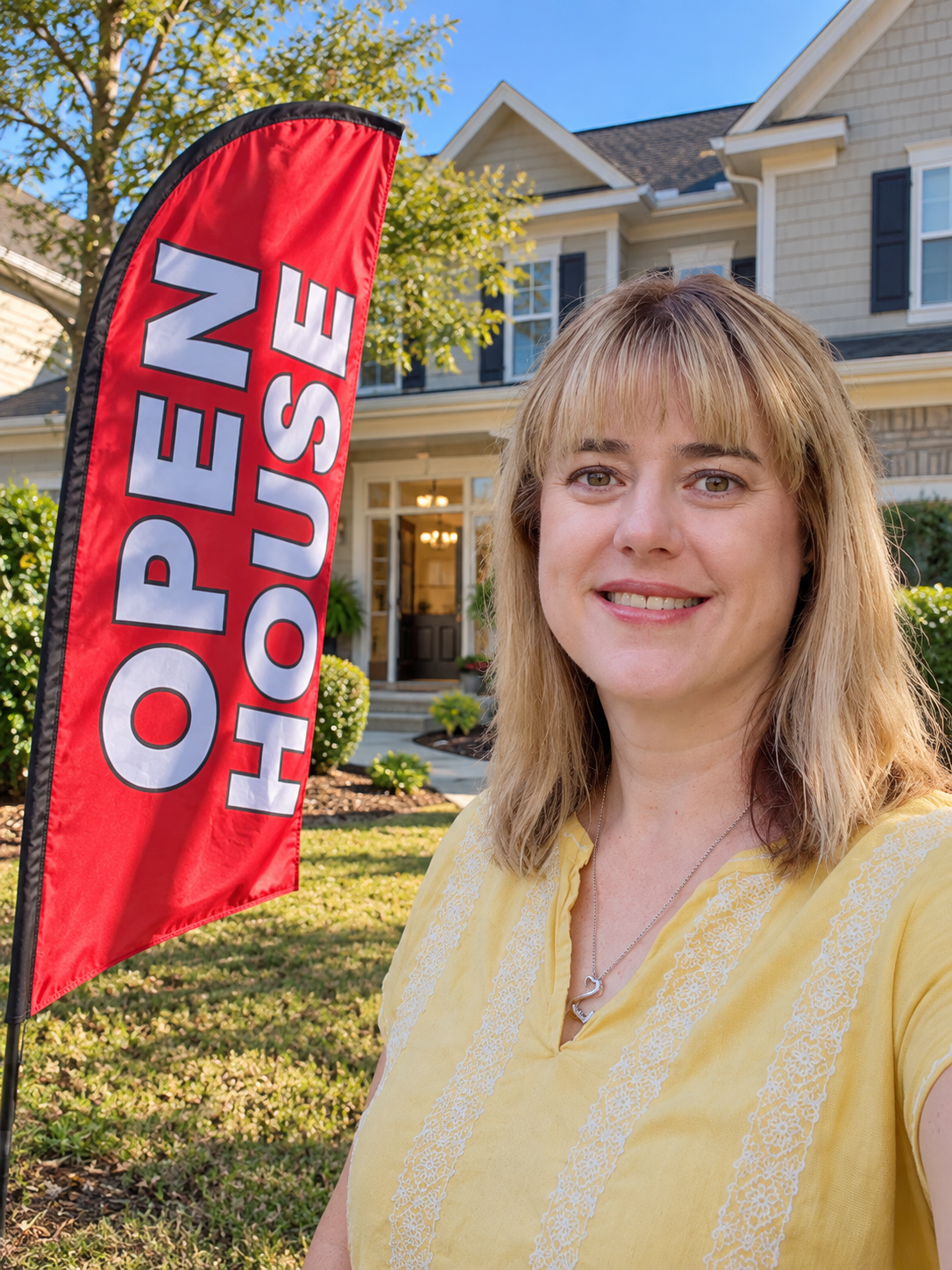
The agent at an open house is usually working for the seller. That's not a bad thing, but it's good to know before you start talking about your budget, your timeline, or how much you love the kitchen.
I want to share a story about a couple I just helped, because it shows why this matters.
A Story From a Recent Closing
These buyers met the listing agent at an open house she hosted. They fell for the home and were ready to make an offer. She represented the sellers, and she could have represented the buyers too. Instead, she asked if I would represent them so each side had its own agent.
I talked with the couple, and they were ready to go. We wrote the offer, and it was accepted. The inspection had no surprises. The sellers were on a quick timeline to move, so instead of asking for repairs, we negotiated a credit for a few minor items. Everyone was happy with that.
On Friday, they signed their documents and got their keys. No more renting for this couple. Now they get to host family gatherings and spend time with the grandkids in their new house.
Who Does the Open House Agent Work For?
The agent hosting an open house is normally the listing agent. That agent has an agreement with the homeowner and works for the seller's best interests.
In North Carolina, agents are supposed to give you the "Working with Real Estate Agents" disclosure early on. It explains who represents whom. Still, it's easy to skip past when you're excited about a house.
A friendly chat with the listing agent is fine. Just remember that what you say may get passed along to the sellers. Things like "we love it" or "we have to move by August" can affect how the sellers respond to your offer.
Three Ways an Agent Can Represent You in North Carolina
1. Single Agency
This is the simplest setup. One agent works for one client. The listing agent works only for the seller, and the buyer's agent works only for the buyer.
Advantages:
- Your agent can give you their full advice, including whether a home is priced fairly and how to negotiate.
- Your agent's loyalty is not split.
- Anything you share stays with your side.
Disadvantages:
- You work with a second agent, which means one more person in the mix.
- If you already like the listing agent, it can feel awkward to start with someone new.
2. Dual Agency
Dual agency means one agent represents both the buyer and the seller in the same sale. North Carolina allows it, but only when both sides give written permission.
The catch is that a dual agent can't fully stand up for either side. That's hard to do when you owe duties to both. North Carolina's standard forms tell each client that the agent will not act as an advocate for them or as their exclusive representative. The written agreement can also bar the agent from sharing certain things, like:
- That one side may accept a different price or terms
- Why either side is buying or selling
- Anything a client has marked as confidential
Advantages:
- One point of contact can make communication quick and simple.
- The agent knows the home well.
Disadvantages:
- You can't get advice on how low to offer or how hard to push.
- Your agent may know something that would help you and not be allowed to say it.
- Neither side gets a true advocate.
3. Designated Dual Agency
This one is a modified form of dual agency. One brokerage represents both sides, but it assigns one agent to the buyer and a different agent to the seller. In North Carolina, both the buyer and the seller must approve this in writing.
Each designated agent represents only their own client and can't share confidential details, like the price their client might accept, without permission. An agent who already learned confidential information about the other side can't be assigned to just one side.
Advantages:
- It feels a lot closer to single agency because each person has their own agent.
- The deal stays inside one firm, which can be convenient.
Disadvantages:
- Both agents work for the same company and usually answer to the same broker-in-charge. In North Carolina, that broker generally should not act as a designated agent when someone they supervise is on the other side.
- The firm still owes duties to both clients, so it relies on strong office policies to keep information separate.
- Your agent's loyalty to you is real, but the firm's loyalty is still divided.
Where I Stand
Personally, I can't imagine representing both the buyer and the seller. My clients deserve 100% of my advice and my skills.
If I'm your buyer's agent, I want to be free to tell you, "I think this house is priced too high," or "Let's ask for a credit here." I couldn't do that if I also owed the sellers the same loyalty. That's why I was so glad the listing agent made the call she did. She looked out for her sellers and made sure the buyers had someone fully on their side too.
Before You Fall in Love at an Open House
- Ask the agent, "Who do you represent?"
- Ask if the agent would represent you as a buyer, and how (single agency, dual agency, or designated dual agency).
- Read any agency disclosure before you sign it.
- Remember that you can say no to dual agency.
- Talk to your own buyer's agent before you start touring, if you can.
North Carolina's Real Estate Commission has been reviewing its agency rules this year, so ask your agent what applies to your purchase.
Frequently Asked Questions
Q: Does the agent at an open house represent the buyer or the seller?
A: Usually the seller. The agent hosting an open house is normally the listing agent, who has an agreement with the homeowner and works for their interests. In North Carolina, agents must give you the Working with Real Estate Agents disclosure early on, which explains who represents whom. If you are touring homes in Union County or the Charlotte area, ask who the agent represents before you share your budget or timeline.
Q: Is dual agency legal in North Carolina?
A: Yes, but only with written permission. North Carolina allows one agent or firm to represent both the buyer and seller in the same sale if both parties agree in writing. A dual agent has limits and can't fully advocate for either side. The NC Real Estate Commission has been reviewing its agency rules, so ask your agent what applies to your purchase in Waxhaw, Monroe, or anywhere in Union County.
Q: What is designated dual agency in North Carolina?
A: Designated dual agency is when one brokerage represents both the buyer and seller but assigns one agent to each side. Each agent represents only their own client and cannot share confidential details, like the price a client might accept, without permission. Both the buyer and seller must approve it in writing. It works more like single agency, but both agents still work for the same firm.
Q: What can a dual agent not do for me?
A: A dual agent can't act as your full advocate. In North Carolina, the written agreement can bar the agent from telling one side that the other may accept a different price or terms, or from sharing why someone is buying or selling. That means you won't get advice on how low to offer or how hard to negotiate. If you want that help, ask for your own buyer's agent.
Sources:
- North Carolina Real Estate Commission, "21 NCAC 58A .0104 Agency Agreements and Disclosure," North Carolina Administrative Code. https://www.law.cornell.edu/regulations/north-carolina/21-N-C-Admin-Code-58A-0104
- NCREC Bulletins, "Dual Agency: When Is It Appropriate?" North Carolina Real Estate Commission, October 20, 2010. https://bulletins.ncrec.gov/276/
- NCREC Bulletins, "Case Study: Dual Agency," North Carolina Real Estate Commission, August 30, 2024. https://bulletins.ncrec.gov/case-study-dual-agency/
Thinking About Buying in the Charlotte Area?
Whether you are looking in North Carolina or South Carolina, I would love to be your guide. Reach out anytime.
Kristen Coulter, REALTOR® | Licensed in NC and SC
Real Broker, LLC | 704-850-9870 | www.KristenCoulter.com | Realtor@KristenCoulter.com
Categories
Recent Posts




Agent North Carolina DRE# 356014South Carolina DRE# 141161
+1(704) 221-1276 | realtor@kristencoulter.com